Career Development From Two Perspectives - Organization & Employee

(Mentorcruise Team, 2022)
What is Career Planning?
Career Planning is a process of
making decisions regarding what you want your career to be. It usually begins
around secondary school, where you make choices regarding the jobs you might
like to do. So you plan and map a course of each stage, choosing studies you
find interesting and have a comfort with. You will follow up with the obtaining
the necessary educational qualifications or the technical skills required, till
you finally achieve your target. It is important to note that you do not forget
about your plan once you decide. You must assess and analyze regularly, your
progress, and make the necessary adjustments when needed.
What is Career Development?
Career Development is a lifelong
process that involves continuously assessing yourself on where you are currently
compared to where you want to be and making the right choices and decisions to
get there. Its a process of self-knowledge as well as training in the skills
needed to achieve that career.
Career planning and development:
Meeting business and employee needs
In
recent decades, career development has seen a shift in the way it is
approached. Traditionally, it was up to an organization to ensure that its
employees had the skills to meet the company’s long-term goals. Now,
however, employees advocate that they are—and should be—responsible for their
own career development.
Career development from two
perspectives
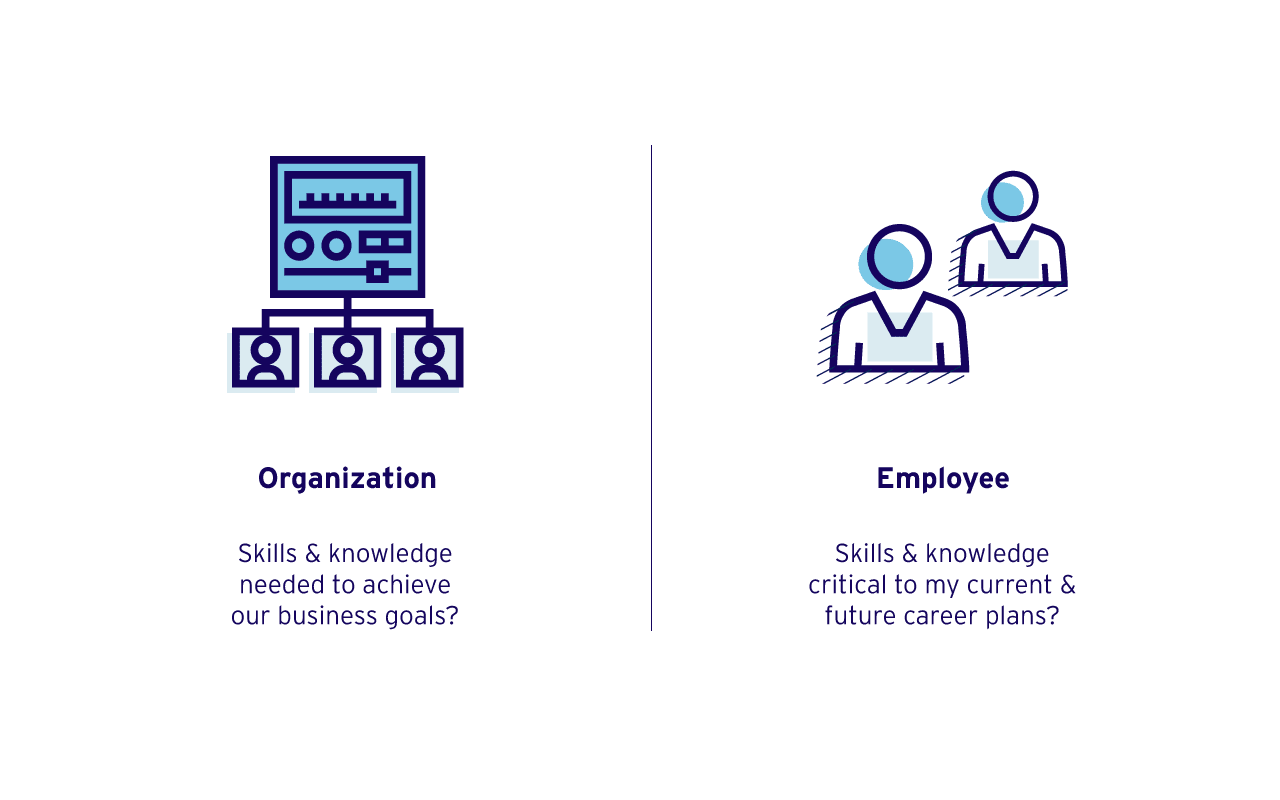
Organization: What
skills and knowledge do we require to achieve our business goals?
Employee: What are the skills and knowledge I think critical to my current and future career plans?
Building an organizations’ career development program
1
.The business plan
2.
Employee career paths
Clearly, an organization must consider its overall direction and goals in order to assess the skills that they need from their workforce to be successful. It is equally important that the organization take into account an employee’s level of engagement to succeed as an individual.
A career development plan can
be customized to fit the employee’s specific needs and circumstances.
It is important to start with a thorough evaluation of current skills and
interests since these will serve as the foundation for setting attainable goals. The plan may also include educational components
such as certification or degree programs, networking strategies, and other
activities designed to promote career growth.
(MaRS., 2023)
A short video on how to develop a S.M.A.R.T career plan.
"Success in not final, failure is not fatal:
it is the courage to continue that counts." Winston Churchill
What is Career Management?
Career Management is the process
by which both employer and employee together plan an employees’ professional
growth using different methods. This is a life-long process, where you must
utilize the necessary resources to achieve your goals.
Conclusion.
Career management covers a range of ideas
such as career planning, self-awareness, career pathing, networking, and continuous
learning.
Many organizations fail to understand the above processers when it comes to career management and are at the risk of losing some of their best talents. It is always in the best interest of both parties if they can have mutual understanding of each other’s needs
References..
Mentorcruise Team,
2022. mentorcruise.com. [Online]Available at: https://mentorcruise.com/blog/effective-career-anagement-101[Accessed 05 August 2013].
MaRS., 2023. learn.marsdd.com.
[Online]Available at: https://learn.marsdd.com/article/career-development[Accessed 8 August 2023].
Base, M. K., 2021. MBA Knowledge Base. Career Development from the Perspective of an Individual Employee, pp. https://www.mbaknol.com/management-articles/career-development-from-the-perspective-of-an-individual-employee[Accessed 8 August 2023].


Agreed, According to Shameera (2021), engaging employees in career planning empowers them to take ownership of their professional growth, leading to increased job satisfaction and higher levels of commitment. When employees feel their career goals align with the organization's objectives, they are more likely to be motivated and dedicated to contributing to the company's success. How can organizations strike a balance between meeting their business needs and supporting individual employee career development in their career planning programs?
ReplyDeleteHi, A career development system will be effective in creating a supportive culture in the organization and help employees grow and use their skills to achieve ambitions related to their career. Both organization and employees can meet their goals simultaneously
DeleteFrom an organizational perspective, career development enhances employee skills, motivation, and performance, contributing to a capable workforce. It boosts employee satisfaction, reduces turnover, and nurtures internal talent, fostering succession planning and organizational stability.
ReplyDeleteFrom an employee standpoint, career development offers growth opportunities, skill enhancement, and increased job satisfaction. It aligns personal goals with professional aspirations, improving job engagement and marketability, leading to a fulfilling and successful career path.
Nice article and a good read.
Thanks Ralph.Lack of career development is one of the main reasons why employees leave their jobs.Employees who work without a proper path of career progression are more likely to experience burnout and lose motivation and ultimately their quality of work drops.Career development programmes help employees excel in their roles,acquire experience and enhance skills.
DeleteA good career development program necessitates careful preparation, alignment with business goals, and a focus on the growth and aspirations of individuals. Organizations can build a career development program that encourages employee advancement, strengthens organizational skills, and contributes to long-term success.
ReplyDeleteThanks Wasantha.Both employer and employee benefit from the implementation of consistent career development programmes. A career development program can help challenge employees to work harder as they know they have goals to meet ,they would work harder to achieve the goals.Employers should provide opportunities for employees to explore other paths which could later contribute to their overall growth.
Delete"Thank you for sharing such a comprehensive and insightful article on HRM career development. Your analysis of the employee and organizational perspectives truly sheds light on the symbiotic nature of growth. Looking forward to more enlightening posts like this!"
ReplyDeleteThanks Ilma.Organisations play an important role in career development. In fact organisations can make an employees career by giving the right tools,recognition,guidance and coaching so that employees get the proper feedback and identify their skills and strengths.
DeleteThis article aptly captures the evolving landscape of career development, where a dual perspective—organization and employee—is explored. The shift from the traditional organizational responsibility to a collaborative approach is evident. The focus on aligning business goals with employee aspirations underlines the contemporary need for mutual growth. (J. Acad. Mark. Sci. 2000, 28, 55–66.) The article effectively emphasizes the symbiotic relationship between organizational success and individual motivation in crafting effective career development strategies.
ReplyDeleteThanks Gayani. For the organisation and the employees to grow and benefit there has to be a collaborative effort.The workplace has changed greatly, whereas before employees were simply offered salaries nowadays they expect an equal working environment based on mutual respect and collaboration.
DeleteAccording to Litano (2016) Career development is essential for both organizations and employees, as it benefits both parties. It enhances talent retention, employee engagement, succession planning, skill enhancement, personal growth, professional advancement, skill diversification, and job satisfaction. Organizations can retain and nurture talent while empowering employees to achieve their professional aspirations and personal growth. Employees benefit from learning new skills, gaining experience, and achieving professional advancement.
ReplyDeleteOverall, career development is a mutually beneficial process that benefits both parties.
Agreed Nalin.When employees know that their employers are actively supporting them in their career development, they are more loyal and hardworking. Also there is less burnout among employees .Talent retention is high as employees are given a chance to enhance their skills or acquire a new skill.
DeleteIndeed, as you described above, career development is not only the employer's responsibility but also the employee's responsibility as well. Although many organisations and employees find it challenging to develop an effective career development strategy, Shaito (2019) suggests the following recommendations for organisations and for employees in order to enhance career development.
ReplyDelete8.1. For Organizations : It is recommended for organizations to:
a) Plan and implement for an effective career development strategy
b) Increase budgets for training programs and workshops related to career development
c) Develop a succession plan
d) Implement for job posting systems
e) Communicate all the above recommendations with employees
8.2. For Employees: It is also recommended for employees to:
a) Don’t wait organizations to develop your career path
b) Take the initiative to develop you skills and competencies
c) Stay up-to-date for any new features related to your field
d) Set SMART goals for you career path
This comment has been removed by the author.
DeleteAgreed Nuwan.
DeleteAs you have pointed out organizations can plan an effective strategy for employees to develop their careers.Employees on the other hand, can use the following steps to develop a plan.
1.Self -Assessment
2.Goal Setting
3.Action Planning
4.Implementation
5.Refinement.
(Team., 2023)
This article beautifully captures the evolving landscape of career planning and development. The shift from a traditional approach to a more collaborative one between organizations and employees is truly noteworthy. It's empowering to see employees taking an active role in shaping their career paths, aligning personal growth with organizational success.
ReplyDeleteThe dual perspective presented, from both the organization and employee viewpoints, highlights the essential balance needed. Organizations need a clear plan to match their business goals with necessary skills, while employees seek to align their aspirations with critical skills for their career journey.
The emphasis on understanding an employee's motivation to succeed is crucial. This demonstrates a holistic approach where personal development and organizational achievements converge.
The inclusion of a video resource on developing a S.M.A.R.T career plan adds practical value to the article. Lastly, the Winston Churchill quote is the perfect finishing touch, reminding us that persistence and growth are the true markers of success.
Overall, this article is an insightful guide for creating a symbiotic relationship between career development and organizational success. It empowers individuals and organizations to navigate this journey hand in hand.
The work environment has changed greatly ,especially with the advance in technology and widespread use of social media. Employees are more aware and are working smarter as well to succeed in their chosen fields. Organizations are making changes, by investing in creating learning opportunities and training programmes for their employees.
DeleteCreating an effective career development program requires thorough planning, alignment with company objectives, and attention to individual growth and aspirations. Companies can design initiatives that promote employee progress, enhance organizational capabilities, and contribute to sustained success.
ReplyDeleteAgreed Hisshanthi.
DeleteLeading companies know how important loyal employees are.Talented employees want to work for a company that will help them build skills and knowledge and further their careers.Job training and continuing education help to fuel employee career growth as well as establishing a formal mentoring programme.
(Half R,.2023)
Impressive article to read. Career development is a win-win for both organizations and employees. By investing in career development, organizations can attract and retain top talent, improve employee satisfaction and engagement, and boost their overall performance.
ReplyDeleteThanks Sachini. Career development helps the organisation to not only retain talent, but also ensures that employees skills are used in a better way and provides job satisfaction for them. In addition, employees are able to better adapt to the changing requirements in the organisation.
Delete